Driveway Repair in Costa Mesa, California
Practical asphalt driveway repairs for damaged, cracked, or uneven surfaces.
Request an Estimate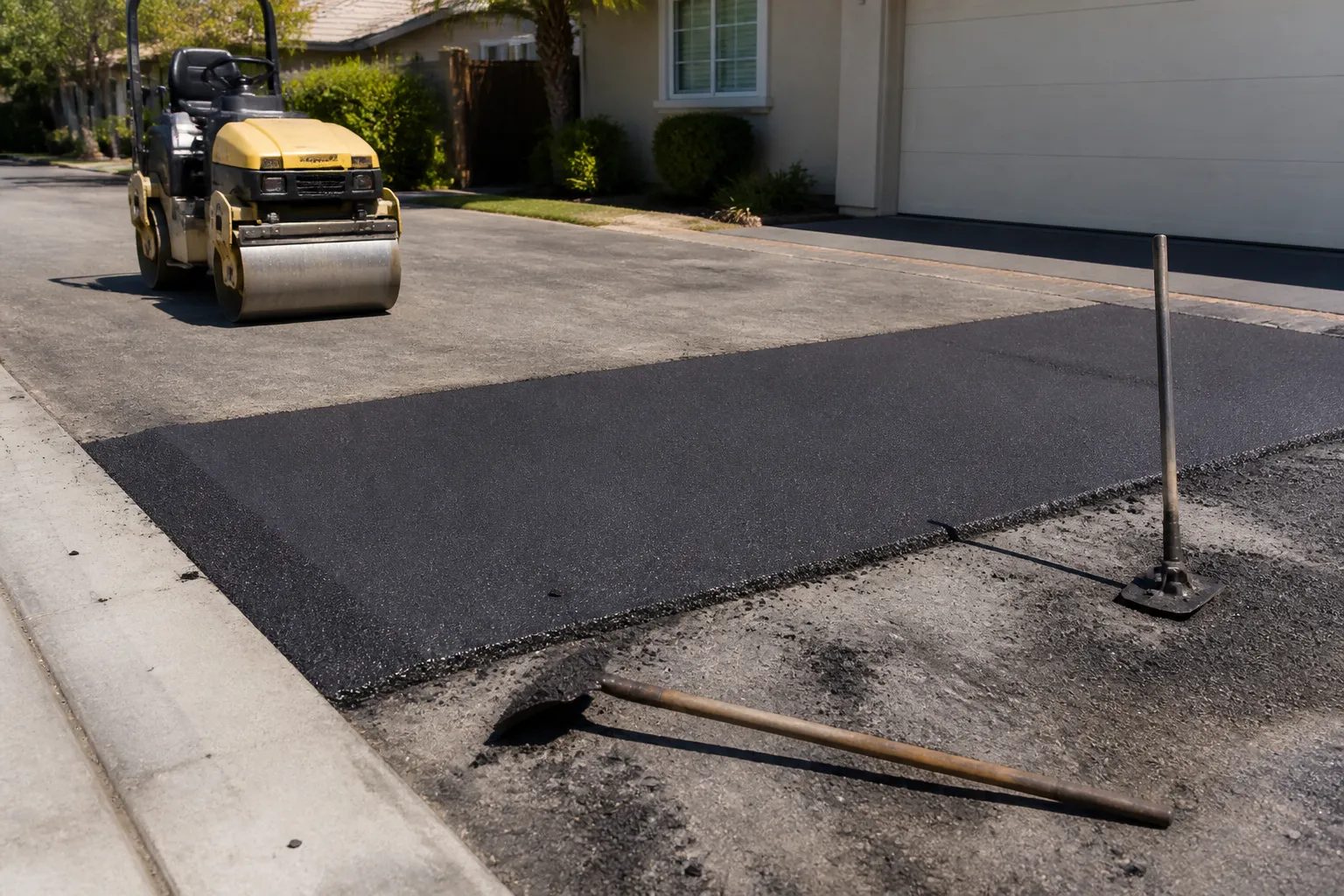
Practical asphalt driveway repairs for damaged, cracked, or uneven surfaces.
Request an Estimate
A cracked, uneven driveway can make every arrival feel less convenient. Small cracks can spread at the edges, depressions can hold water, and potholes can grow with repeated vehicle traffic. Driveway repair addresses damaged asphalt with a scope based on where the surface has failed and how the rest of the driveway is holding up. Costa Mesa Asphalt Paving can help you plan the next step.
Costa Mesa Asphalt Paving evaluates driveway problems in Costa Mesa with attention to daily use, drainage, driveway transitions, and the surrounding pavement. A practical recommendation starts with the condition of the asphalt, not just the most visible crack or hole.
Some driveways need a focused patch in one location. Others have cracks that can be addressed before they widen, while broader surface wear may point toward resurfacing or replacement. Looking at the full driveway helps separate a local repair from a surface-wide concern.
Driveway repairs are often needed where vehicles turn, stop, enter from the street, or approach a garage. Those areas can experience concentrated stress. Water movement also matters because low spots and poor drainage can weaken asphalt over time.
Visible damage does not always tell the entire story. We consider whether the surrounding surface is firm and whether there are signs that a larger portion of the driveway is moving or breaking down.
We identify unstable material, note the size and location of the failure, and review nearby cracks, edges, and transitions. This gives the repair work a clear boundary.
Failed asphalt is removed where needed so new material is not placed over loose or crumbling pavement. The exposed area is evaluated before the repair moves forward.
New asphalt is placed and compacted to create a clean tie-in with the existing driveway. The work is focused on restoring usable access while respecting drainage and nearby surfaces.
Targeted repair can make sense when the damage is limited and the overall driveway remains serviceable. An overlay may be worth considering when the base is stable but the surface is worn across a larger area. Removal and replacement can be more appropriate when failure is widespread or the driveway has significant underlying problems.
There is no need to assume the largest scope before seeing the surface. An on-site review helps connect the recommendation to the driveway’s actual condition and the property owner’s goals.
Water should move away from the driveway in a practical direction. When a low spot collects water, repair work may need to account for surface elevation and surrounding drainage paths. The same is true at garage thresholds, sidewalks, curbs, and street connections, where a poor transition can make driving uncomfortable or direct water toward the wrong area.
Tell us if the driveway floods, puddles after storms, or has changed shape over time. Those details help identify conditions that should be considered alongside the visible asphalt damage.
Often, yes. A targeted repair may be appropriate when the surrounding asphalt remains in suitable condition.
We can evaluate damaged areas near garages and other transitions as part of the driveway review.
A repair addresses the failed area. Existing or future issues in other parts of the driveway may need separate attention.
Yes. Water movement and low spots are important considerations when planning asphalt repair.
Repair and maintenance can be discussed together, with timing based on the condition and scope of the driveway.
Share the driveway location, approximate damaged area, type of visible problem, and any access or drainage concerns.
Our Service Standard
Straightforward asphalt recommendations for residential driveways, commercial parking lots, and the maintenance work that helps paved surfaces stay usable.
From driveways to parking areas, we plan paving, repair, resurfacing, and maintenance around the way the property is used.
We review the pavement condition and recommend a focused repair when it fits instead of pushing a larger scope without a reason.
Paving, patching, crack filling, sealcoating, resurfacing, striping, and maintenance can be coordinated around the surface condition.
We understand the value of practical drainage, clean transitions, and maintenance for Orange County driveways and commercial pavement.
We explain the work area, practical options, and expected steps so property owners can make an informed decision.
FAQ
We provide asphalt paving, repair, driveway paving, parking lot paving, resurfacing, sealcoating, crack filling, pothole repair, milling, striping, and maintenance.
Yes. We handle residential driveways as well as commercial parking lots and other paved surfaces.
Yes. Depending on the condition of the pavement, we may recommend crack filling, patching, pothole repair, resurfacing, or another repair-focused solution.
Resurfacing adds a new layer to improve the surface when the base is still in workable condition. Full replacement is considered when the pavement is too worn or damaged for a simpler repair to make sense.
Yes. Ongoing maintenance can include sealcoating, crack filling, striping, milling, and repairs that help preserve the surface over time.
Yes. We can evaluate the lot and provide striping as part of a paving, repair, or maintenance plan when the surface is ready for it.
Start by telling us what the surface looks like and what problem you want solved. We will help you understand whether paving, repair, resurfacing, or maintenance is the best fit.
Yes. We also serve nearby Orange County communities including Newport Beach, Irvine, Santa Ana, Huntington Beach, Tustin, Fountain Valley, Orange, Westminster, Garden Grove, Seal Beach, and Anaheim.
Tell us about your driveway, parking lot, repair need, or maintenance concern. We will help you understand the right asphalt solution for your property and budget.