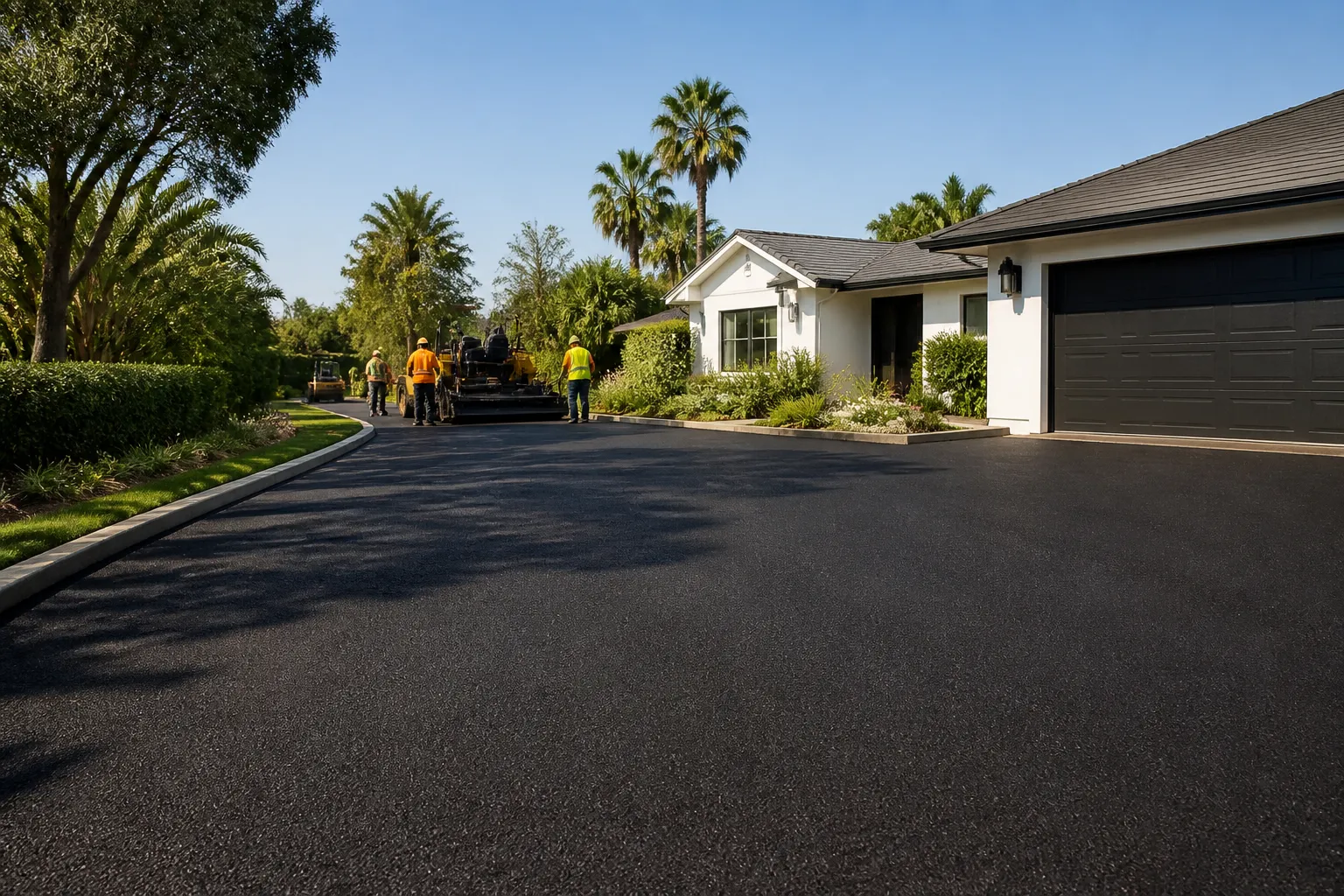
Choosing a driveway material is a long-term property decision. Asphalt and concrete are both common choices in Costa Mesa, but they perform differently, look different, and call for different maintenance habits. The better material is not the same for every home. It depends on your budget, driveway layout, expected use, drainage, and the condition of the ground below the surface.
A thoughtful comparison starts with the whole pavement system, not just the finished color. Proper grading, base preparation, and drainage have a major effect on whether either material remains functional over time.
Why homeowners choose asphalt
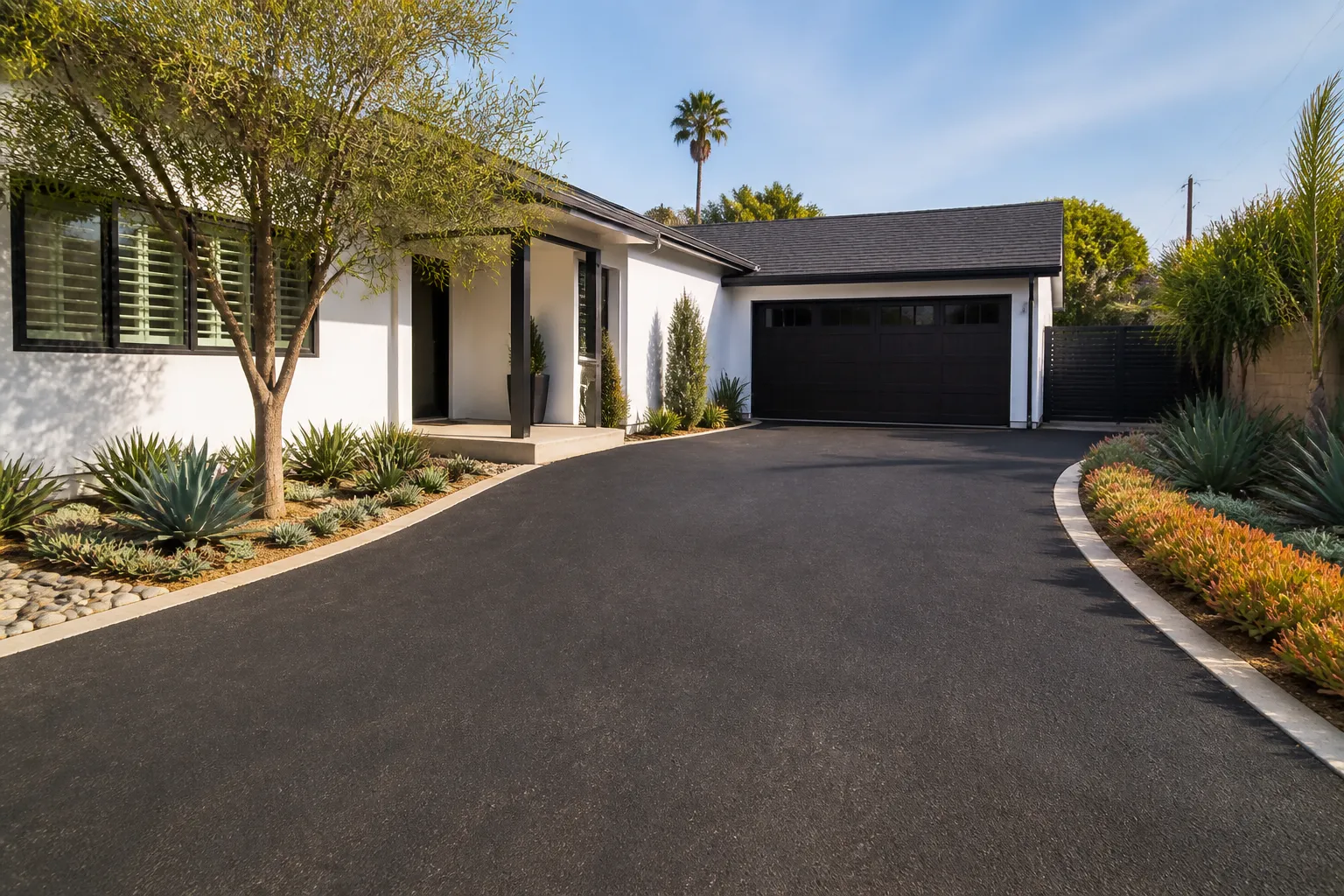
Asphalt has a dark, uniform appearance and can be installed in a variety of driveway shapes. It is commonly selected for its practical repair options and ability to provide a smooth driving surface. Cracks and isolated damaged areas can often be repaired, and an aging asphalt driveway with a stable base may be resurfaced instead of removed completely.
Asphalt also has some flexibility, which can be helpful where soils move slightly over time. That does not eliminate the need for a well-built base, but it is one reason asphalt remains a common driveway material. A properly designed driveway should be matched to vehicle use, from passenger cars to heavier vehicles that may occasionally use the property.
Why homeowners choose concrete
Concrete offers a lighter-colored surface and can be finished with different visual treatments. Some homeowners prefer its appearance, especially when it coordinates with existing walkways or hardscape. It can be a good fit when the property owner prefers a rigid slab surface and understands the maintenance needs that come with it.
Concrete uses control joints to manage cracking as the material cures and responds to environmental changes. Those joints are a normal part of a concrete driveway. If cracking or settlement becomes significant, repairs can be more visible because matching the original color and texture is difficult. The choice is often as much about appearance and repair preferences as it is about the initial installation.
Consider Costa Mesa conditions
Local weather is generally favorable for outdoor paving, but driveways still deal with sun exposure, irrigation overspray, occasional heavy rain, coastal moisture, and everyday vehicle traffic. Water remains a key concern for both materials. It should be directed away from the garage, home, and low areas rather than allowed to sit on the surface or enter the base.
Tree roots, soil conditions, and existing drainage can influence the decision. A driveway that has settled or cracked because of an underlying problem needs that problem addressed before new asphalt or concrete is installed. Replacing only the visible surface can lead to repeated trouble.
Maintenance differences
Asphalt benefits from routine inspection, crack filling when needed, and sealcoating at appropriate intervals once the pavement is ready for it. Keeping water out of cracks and keeping the surface clean helps preserve the pavement. Prompt repairs also make it easier to address isolated problems before they grow.
Concrete benefits from keeping joints and drainage areas clear, cleaning spills, and monitoring cracks or movement. Depending on the finish and exposure, homeowners may also choose to use a suitable protective treatment. Neither surface is maintenance-free. The difference is in the type of care and repair that each one needs.
Budget and installation scope
The installed cost of a driveway is influenced by access, demolition, base work, thickness, drainage, and the size and shape of the project. Comparing materials only by a general cost figure can be misleading. Ask for a defined scope that explains what will be removed, how the base will be prepared, and how edges and transitions will be handled.
For an existing driveway, it is also worth asking whether repair or resurfacing is viable. If the base is stable, asphalt may offer a practical path to renewing the surface without a full reconstruction. If the underlying base has failed, any material will need proper preparation to perform well.
Which material is better?
Asphalt can be a strong choice for homeowners who want a smooth, repairable driveway and a practical maintenance path. Concrete may suit homeowners who prefer its appearance and a rigid slab design. The right answer comes from the property’s conditions and your priorities, not a universal rule.
Costa Mesa Asphalt Paving can review your existing driveway, drainage, and planned use to help you understand whether asphalt is the right fit and what preparation the project needs for a dependable result.