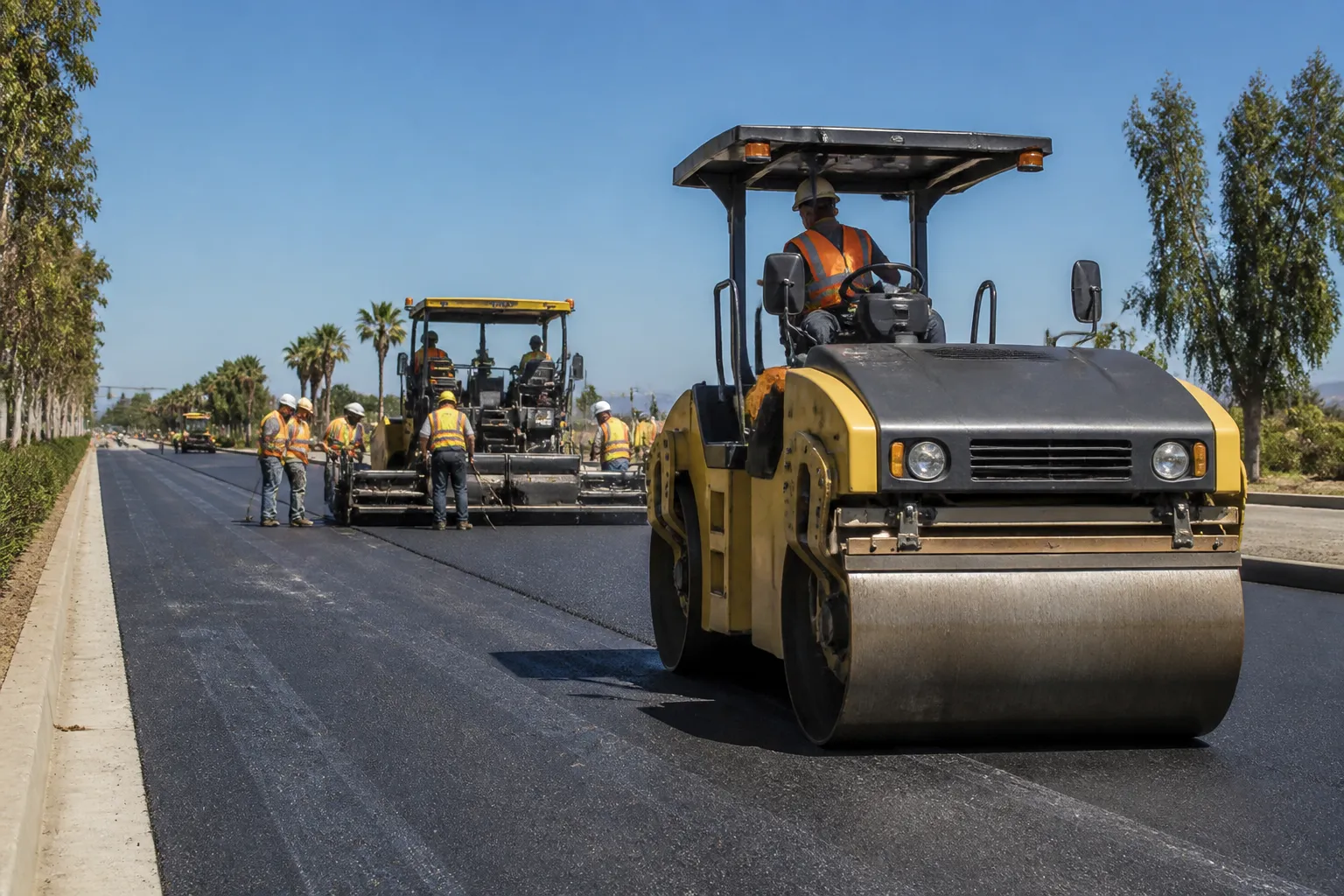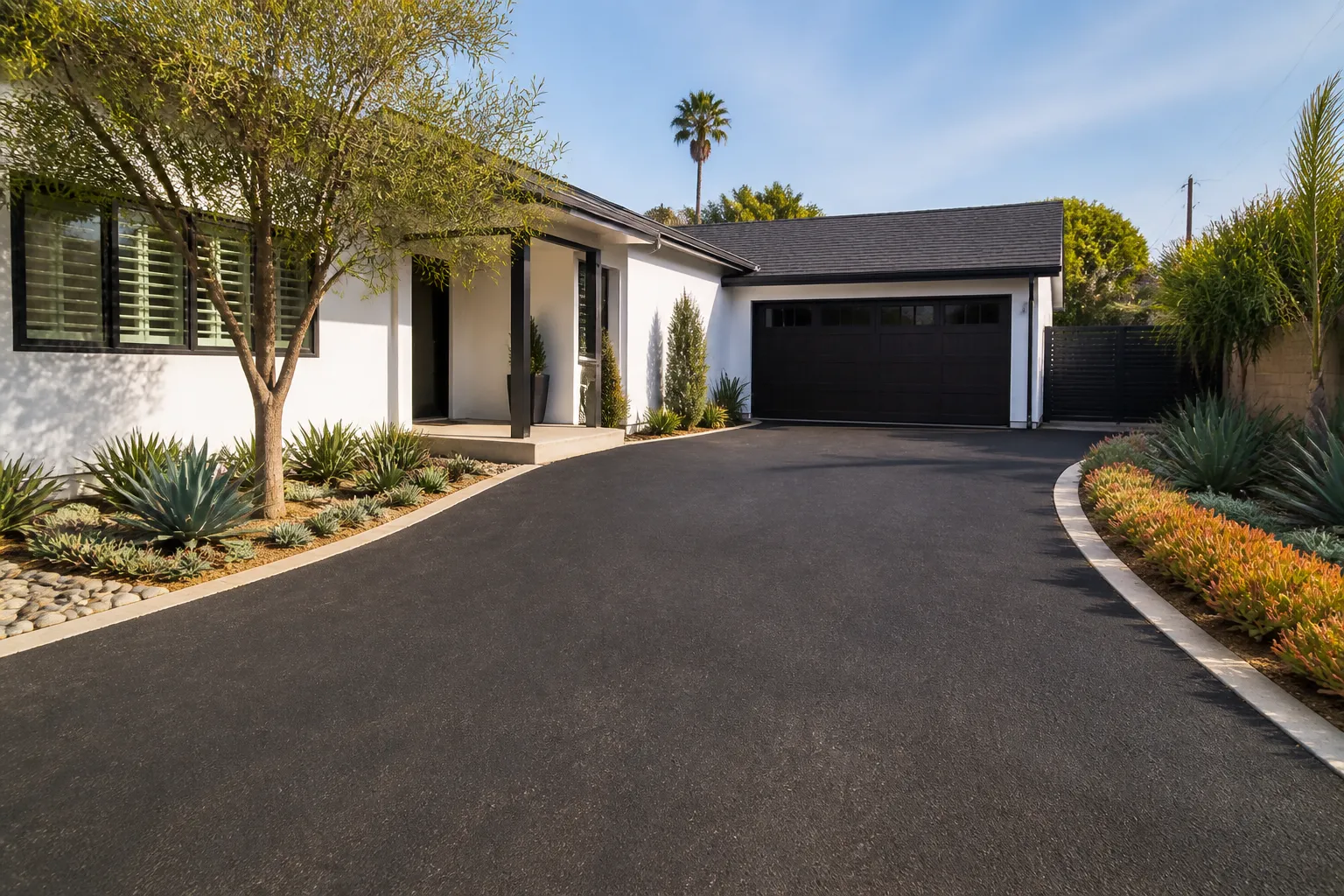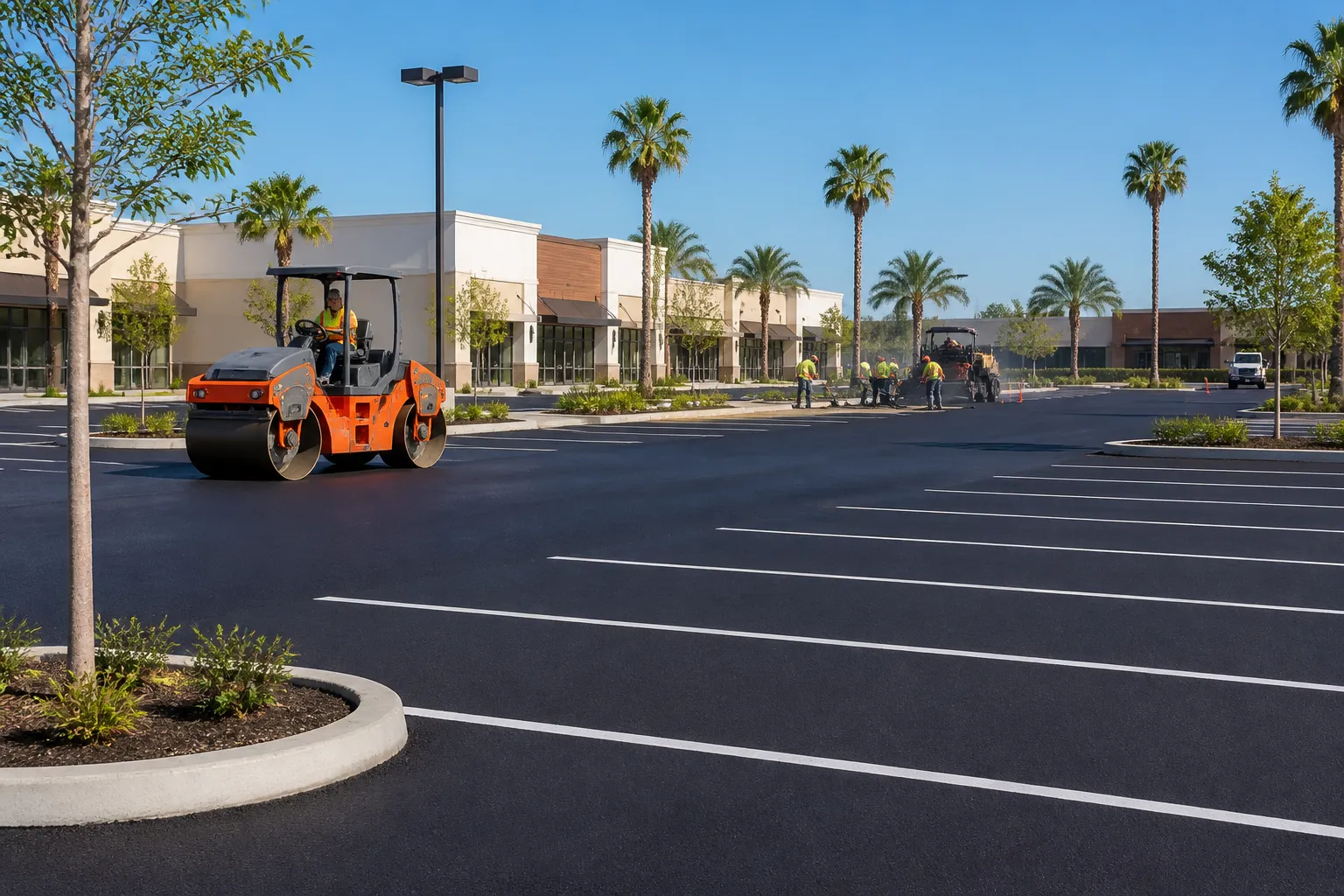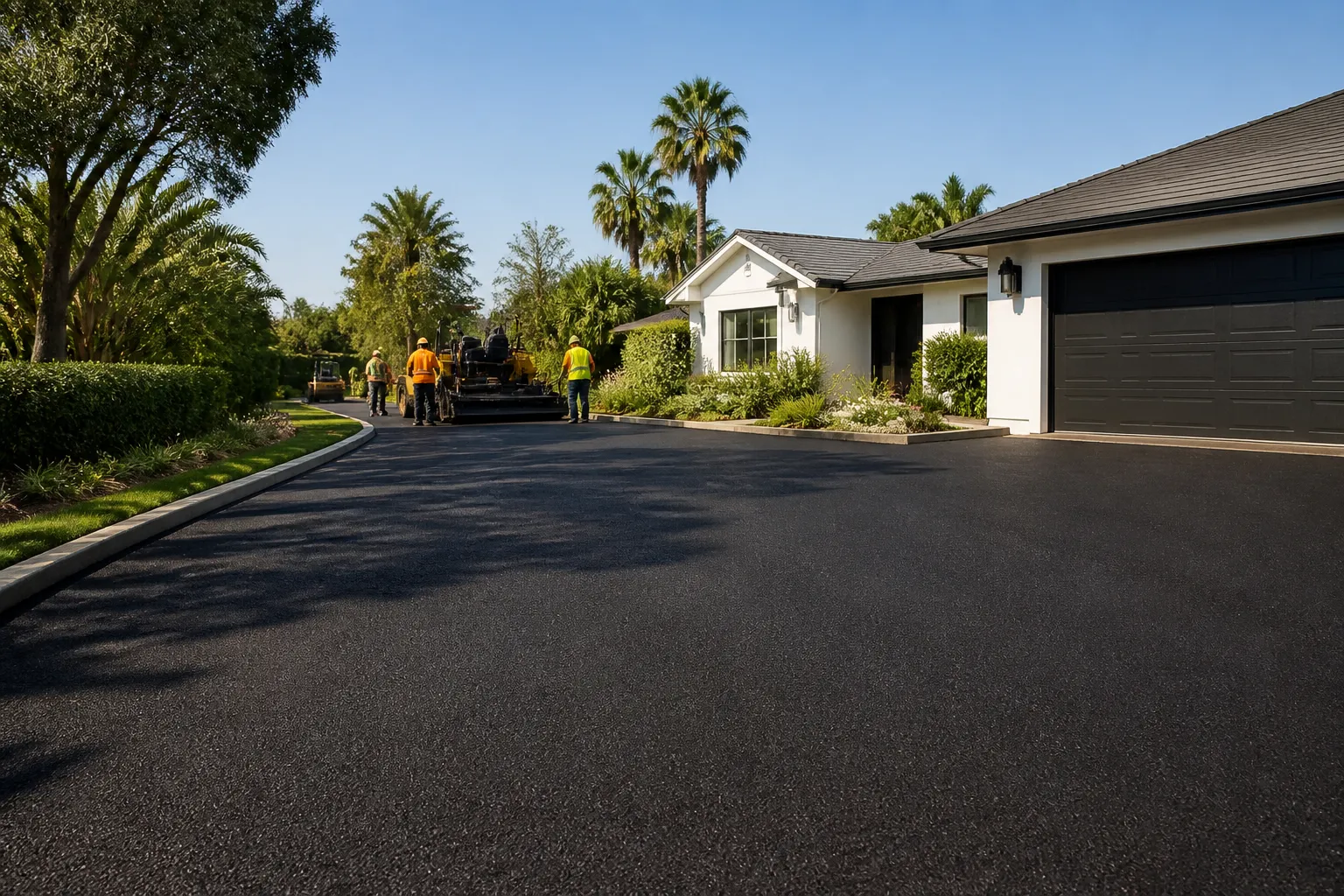
Sealcoating is a maintenance treatment that helps protect an asphalt driveway or parking lot from sun exposure, moisture, and everyday wear. It refreshes the dark appearance of pavement, but its more important purpose is to help preserve a surface that is already in maintainable condition. Knowing when to sealcoat is useful because applying it too early, too often, or over unaddressed damage does not solve underlying pavement problems.
What sealcoating does and does not do
A quality sealcoat forms a protective layer on the asphalt surface. It can help reduce the effects of oxidation and make the pavement easier to keep clean. For commercial properties, it can also provide a fresh background for visible parking-lot markings after the surface is prepared and striped.
Sealcoating is not a structural repair. It does not rebuild a failed base, fill deep potholes, correct ponding water, or fix widespread alligator cracking. Those issues should be evaluated and repaired first. Applying a dark coating over active damage may improve appearance briefly while allowing the deterioration to continue underneath.
A practical sealcoating interval
There is no single calendar rule for every driveway and lot. Many asphalt surfaces are evaluated for sealcoating on a recurring multi-year schedule, but the ideal timing depends on pavement age, traffic volume, sun exposure, drainage, prior maintenance, and the product and application conditions. A residential driveway usually experiences different wear than a busy commercial lot with delivery vehicles and frequent turning movements.
The best approach is to inspect the pavement regularly rather than automatically scheduling work by the date alone. If the surface is still in good condition and holding up well, a contractor may recommend waiting. If it looks dry, faded, porous, or increasingly weathered while the pavement structure remains sound, it may be approaching the right time for a protective treatment.
New asphalt needs time before sealcoating
Fresh asphalt should not be sealed immediately after installation. It needs time to cure and release oils before a coating is applied. The appropriate timing can vary with the asphalt mix, weather, traffic, and site conditions. Ask the paving contractor who installed the surface for maintenance guidance and have the pavement evaluated before scheduling sealcoating.
During the early life of a driveway or lot, protect the edges, avoid concentrated heavy loads when possible, and watch for drainage issues. Early attention to cracks or low spots is often more valuable than rushing to apply a surface treatment.
Factors that affect the schedule
- Sun exposure: Long periods of direct sunlight can oxidize asphalt and make it look gray or dry.
- Traffic: Frequent vehicles, turning tires, loading zones, and dumpsters create more wear than a lightly used driveway.
- Water: Poor drainage, irrigation overspray, and standing water can shorten pavement life.
- Surface condition: Cracks, raveling, patches, and oil spots may need preparation or repair before coating.
- Previous maintenance: The condition of past repairs and coatings helps determine what the surface needs next.
Preparation matters
Good results begin with preparation. The pavement should be cleaned, cracks should be addressed where appropriate, and potholes or damaged sections should be repaired before sealcoat is applied. The surface also needs suitable weather conditions so the material can set properly. A contractor will assess the forecast, surface condition, and use of the property when planning the work.
For a parking lot, timing is important because areas may need to be closed or staged while the coating cures. Property managers can reduce disruption by scheduling around lower-traffic periods and clearly communicating temporary parking changes. Striping is normally completed after the sealed surface is ready.
Watch for signs your pavement needs attention
Fading alone does not always mean immediate sealcoating is necessary, but it is a reason to inspect the surface. Other signs include small cracks beginning to open, loose aggregate, rough patches, or areas that retain water. Catching these issues early can help prevent a minor maintenance need from becoming a larger repair project.
Plan maintenance around your property
Costa Mesa Asphalt Paving can assess the condition of your driveway or parking lot and recommend whether sealcoating, crack filling, repairs, or a different pavement solution is appropriate. The goal is to protect a sound surface and address damage before it spreads.