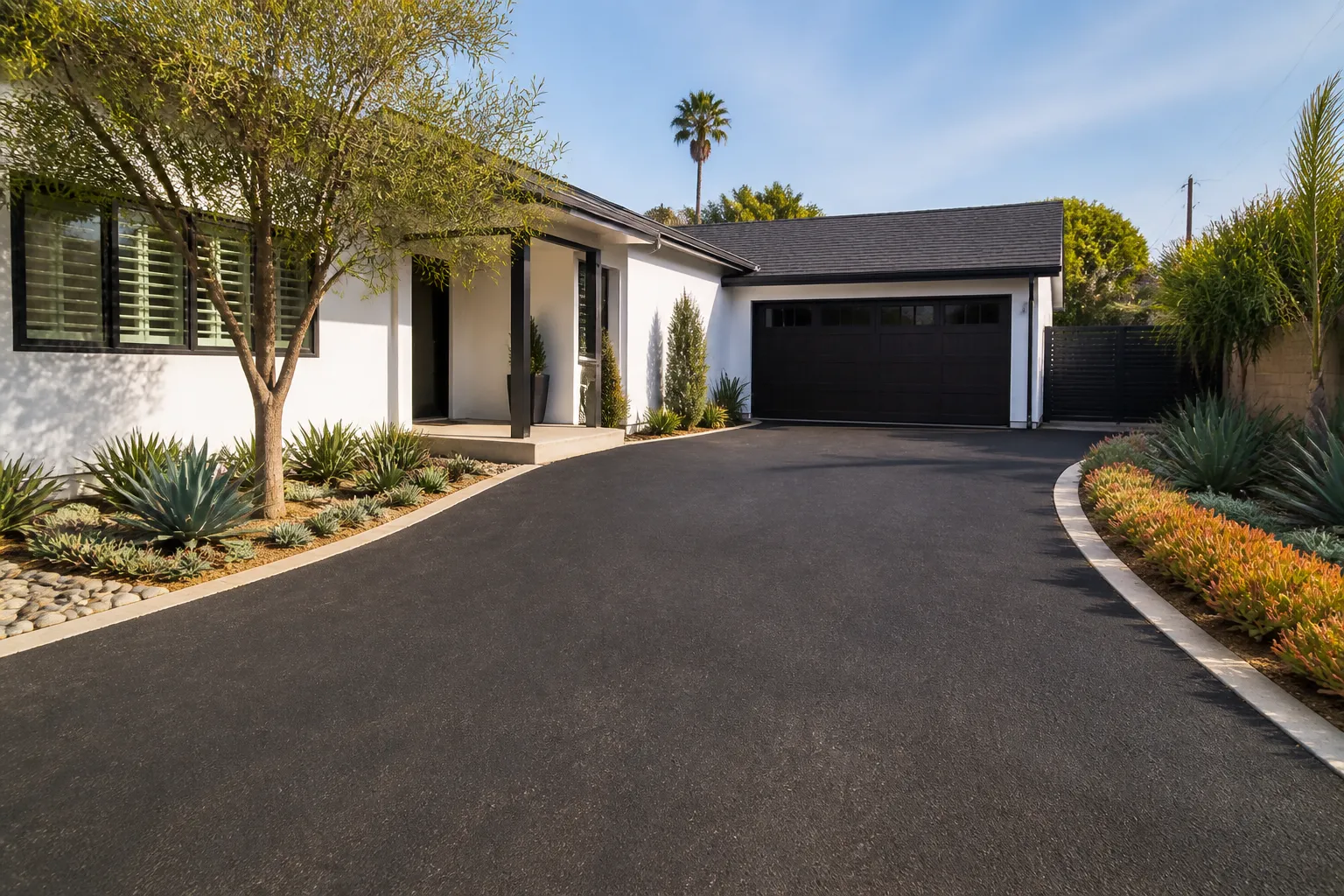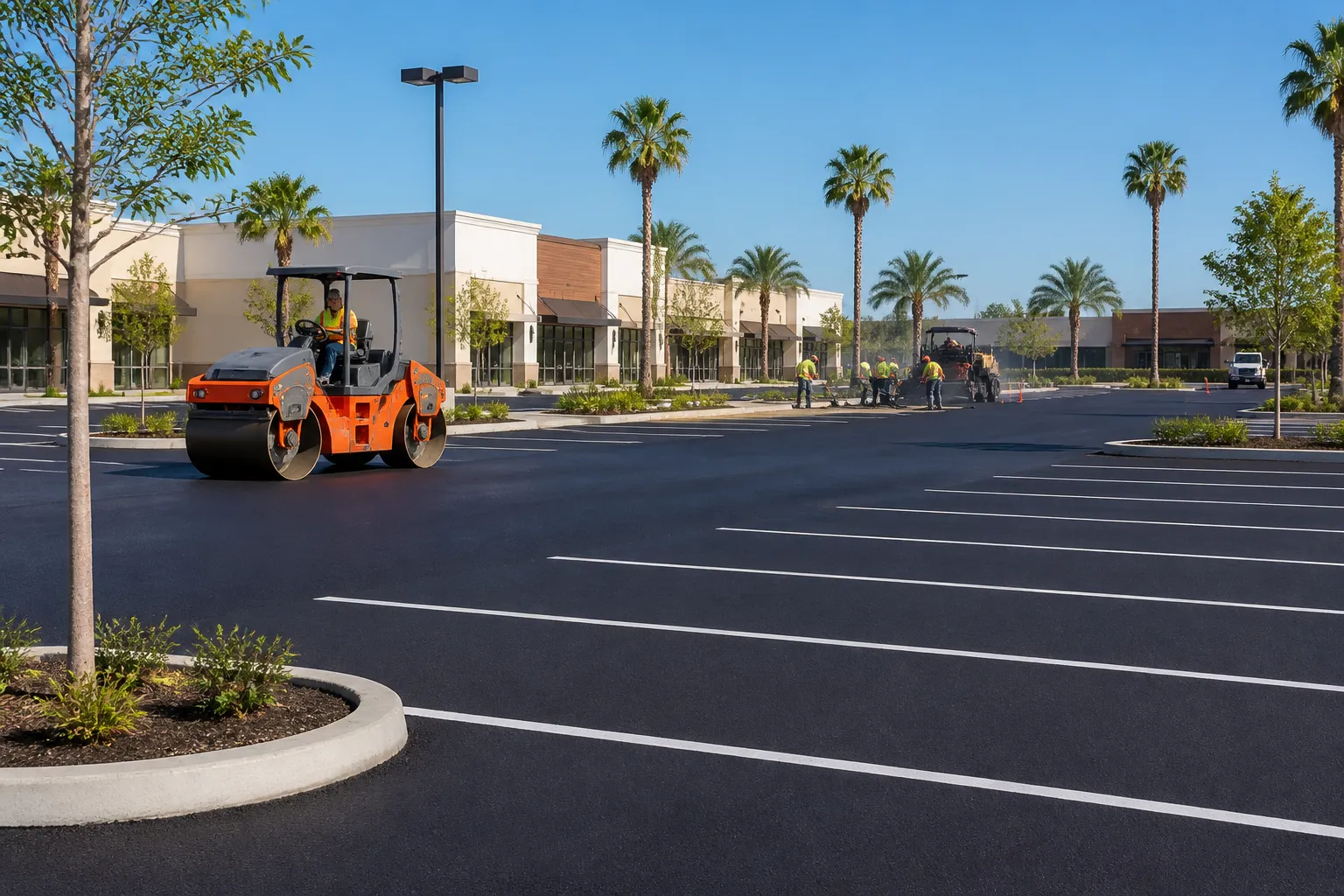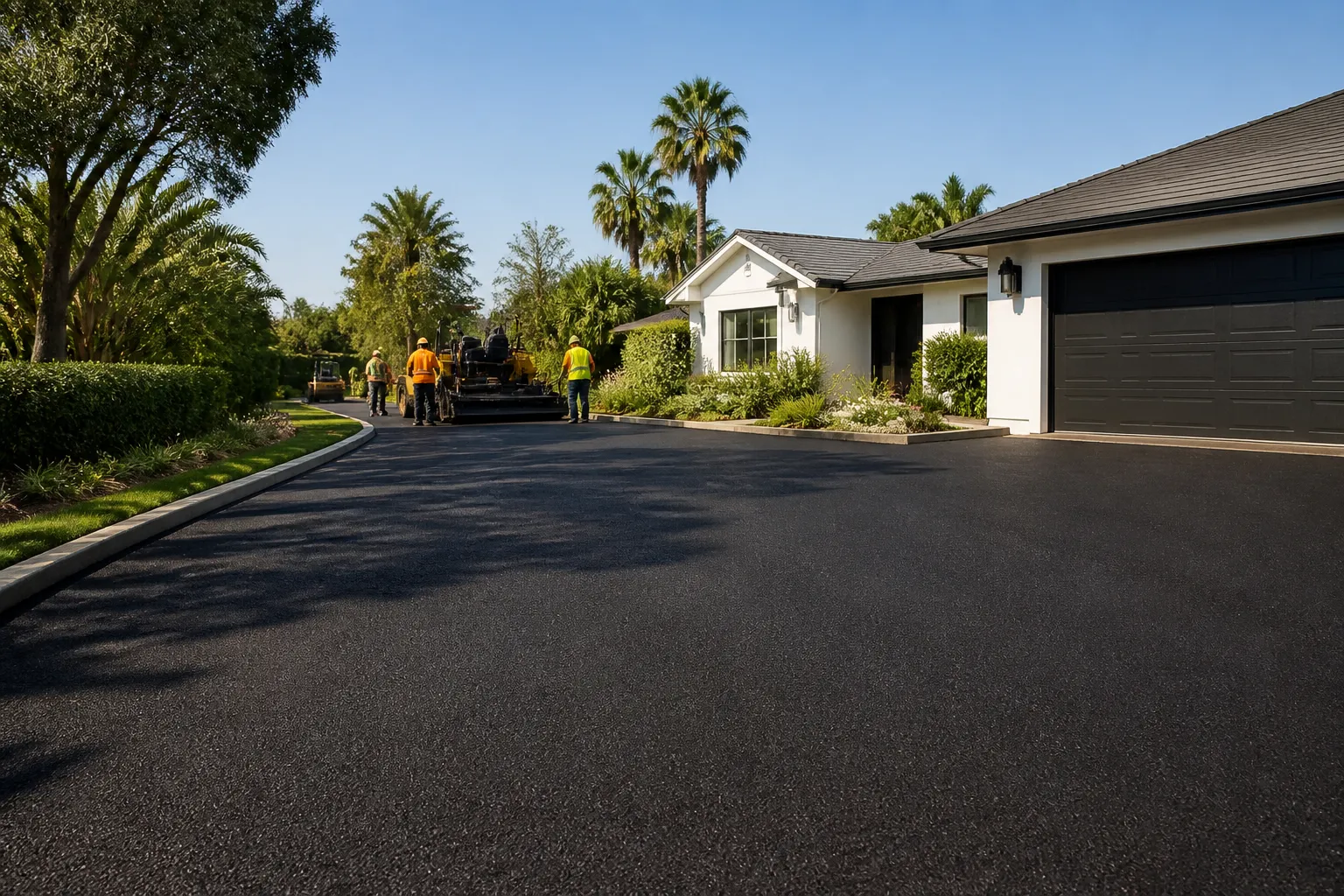
Asphalt paving supports driveways, private streets, commercial parking lots, loading areas, and many other properties throughout Orange County. A successful project involves more than laying a new black surface. It requires an understanding of existing pavement conditions, water movement, traffic demands, base preparation, access, and the long-term maintenance plan.
This guide gives property owners and managers a practical overview of how asphalt paving projects are evaluated and completed. Whether you are planning a new driveway, repairing a deteriorated lot, or comparing resurfacing with replacement, the goal is to make an informed decision based on the property’s actual needs.
How an asphalt pavement system works
Asphalt pavement is a layered system. The visible asphalt surface carries traffic, but its performance depends on the ground and base materials beneath it. A stable subgrade, properly prepared aggregate base, suitable asphalt thickness, and positive drainage work together to support vehicles and resist damage.
When one part of the system is weak, the surface may show cracks, depressions, raveling, or potholes. For example, water that enters through cracks can weaken the base below. Heavy loads on an insufficient pavement section can create fatigue cracking. This is why a useful paving recommendation addresses the cause of the damage instead of only the visible symptom.
Common types of asphalt projects
New asphalt installation is typically used for a new driveway, an expanded parking area, or a site where the existing surface and base are being fully rebuilt. The work can include excavation, grading, aggregate installation, compaction, and asphalt placement.
Asphalt repairs address local problems such as potholes, failed patches, damaged edges, or utility cuts. Depending on the condition, a repair may involve removing damaged asphalt, rebuilding a portion of the base, and placing new material.
Resurfacing adds a new asphalt layer over an existing surface that has been repaired and confirmed stable enough to receive it. It is often considered for pavement with broad surface wear but a sound foundation. Replacement is more extensive and becomes appropriate when pavement failure is widespread or when the base needs rebuilding.
Begin with a site evaluation
Before comparing options, inspect the whole paved area. Note cracking patterns, potholes, low spots, drainage paths, failing edges, oil stains, past repairs, and areas where vehicles turn or stop often. Property managers should identify truck routes, loading zones, dumpster areas, and access points. Homeowners should note garage approaches, the connection to the street, landscaping, and irrigation patterns.
Share this information during an estimate. It helps the contractor understand where problems occur and how the property is used. A thorough review also includes the layout, access for equipment, elevation changes, adjacent concrete, curbs, drains, and utility structures. These site details affect both the construction method and project schedule.
Drainage should be part of every paving conversation
Orange County’s dry weather can make drainage easy to overlook, but water remains a major source of asphalt deterioration. Irrigation, roof runoff, coastal moisture, and seasonal storms can all direct water onto pavement. If water collects in the same area, it can reach cracks, soften the base, and contribute to settlement.
A paving plan should preserve or improve drainage. Depending on the site, this may involve adjusting slopes, repairing depressions, working around catch basins, or improving transitions at driveways and sidewalks. Simply applying new asphalt over a low area does not always correct the reason water is collecting there. An assessment can identify whether the issue is a surface profile problem or a deeper base condition.
Why base preparation matters
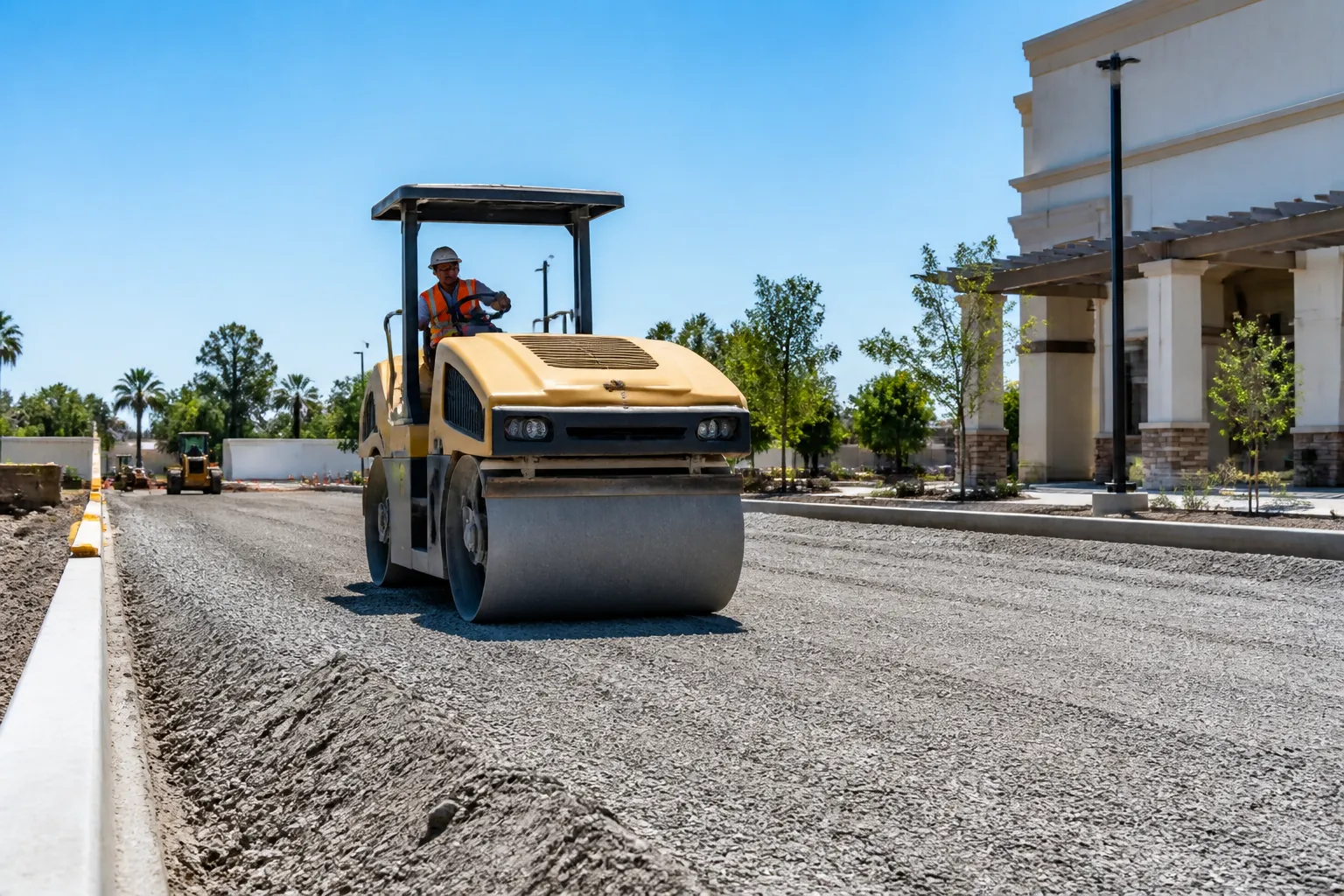
The base provides the support that asphalt needs to handle traffic. It is prepared by grading and compacting suitable material to create a stable foundation. The required design varies with the soil, expected vehicle loads, drainage conditions, and intended use of the paved area.
A residential driveway used by passenger cars has different needs from a commercial drive lane used by delivery trucks. Loading zones, entrances, and dumpster areas may experience more concentrated stress than parking stalls. Building every area in exactly the same way may not be the most practical approach. A contractor can evaluate high-use areas and recommend a pavement system that fits the way the property operates.
Asphalt paving from preparation to finish
Every project is different, but the general sequence begins with site preparation. Existing asphalt or concrete may be removed if needed. The subgrade and base are graded and compacted, then drainage features and transitions are prepared. When the base is ready, hot-mix asphalt is placed, shaped, and compacted to create a smooth, stable surface.
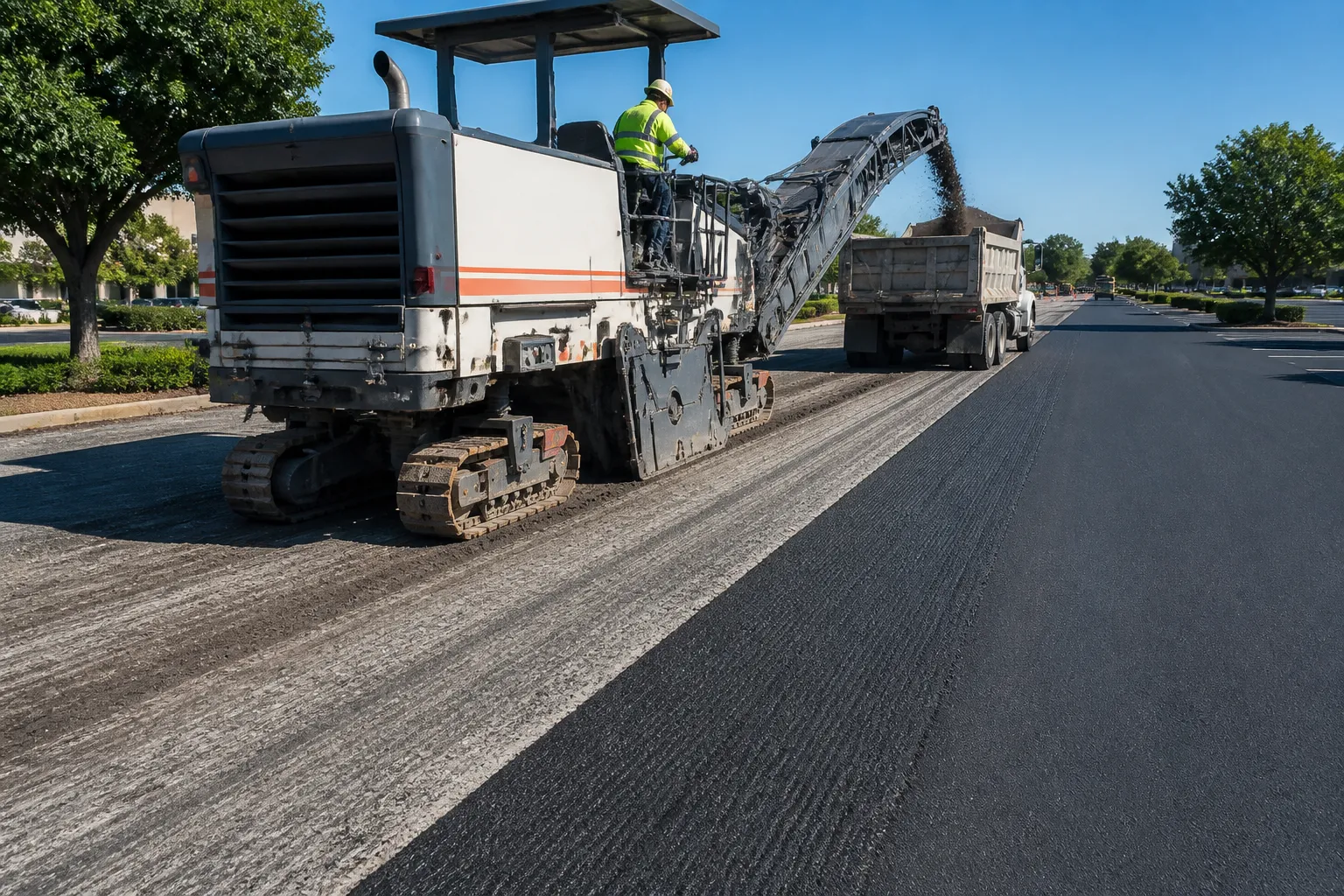
For a resurfacing project, preparation may include cleaning, crack repair, localized patching, milling, and adjusting transitions. Milling removes a controlled depth of old asphalt. It can create room for a new overlay near curbs, drains, garage doors, and sidewalks without raising the final surface too high. A tack coat may be used to promote a bond between the existing pavement and the new layer.
Choosing between repair, resurfacing, and replacement
Repair is a good fit for isolated damage when surrounding pavement remains stable. It can address potholes, small failed areas, and damaged edges. The key is to evaluate what caused the failure. A recurring pothole or depression may require base repair rather than another surface-level patch.
Resurfacing can renew the appearance and ride of pavement that is structurally sound but weathered, faded, or marked by smaller surface cracks. It is not intended to solve broad structural failure. If alligator cracking, major settlement, soft spots, or severe drainage problems appear throughout the lot, replacement or full-depth reconstruction may be a better long-term solution.
Replacement creates the opportunity to correct the pavement structure from the bottom up. It may involve demolition, excavation, base installation, grading, and new asphalt. While this is a more involved scope, it is sometimes the only way to address a failed foundation effectively.
Commercial parking-lot considerations
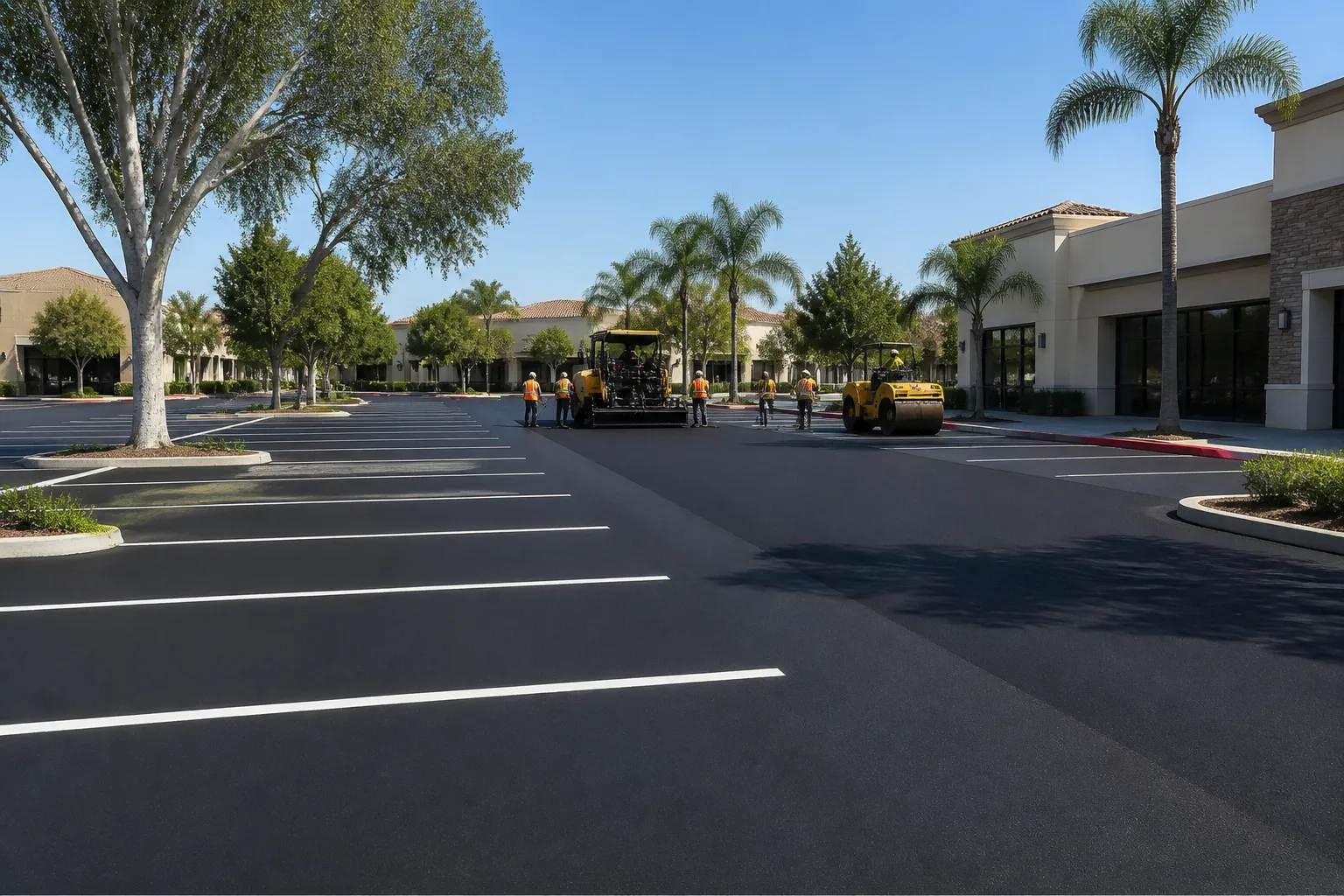
Commercial paving requires attention to operations as well as pavement condition. Businesses may need customer parking, deliveries, emergency access, or specific entrances to remain open. A plan can divide work into phases so one section is completed while another remains available, when site conditions allow.
Line striping, accessible parking markings, directional arrows, wheel stops, loading zones, and fire-lane markings are also part of the finished lot. The layout should be planned after paving work so the surface is prepared for marking. Good coordination reduces disruption and helps create a clear, usable traffic pattern.
Questions to ask when reviewing a proposal
A clear paving proposal should describe the project area, the condition being addressed, preparation work, base work where applicable, asphalt installation, drainage considerations, edge or transition details, and cleanup. For a commercial lot, it should also clarify phasing and traffic control where needed.
Ask whether the price includes demolition or milling, hauling, repairs to failed areas, drainage structure adjustments, striping, and final access preparation. Not every project requires all of these items, but knowing which are included allows you to compare scopes fairly. The lowest bid is difficult to evaluate when important preparation steps are omitted or not defined.
Plan for maintenance after paving
New pavement still benefits from routine care. Keep water flowing to intended drainage points, sweep debris from edges and drains, clean up automotive spills, and inspect for cracks or surface changes. Sealcoating may be appropriate once asphalt has cured and when the surface is in suitable condition. It is a protective maintenance service, not a substitute for repairing failed pavement.
Prompt crack filling and pothole repair can help reduce water intrusion and prevent localized issues from expanding. For commercial sites, a simple pavement record with photos and repair history can make future planning easier. Homeowners can do the same with an annual walk-through and notes about areas that change over time.
Choose a property-specific paving plan
There is no one-size-fits-all answer to asphalt paving in Orange County. The right approach reflects your driveway or parking lot’s condition, drainage, traffic, layout, and long-term needs. Costa Mesa Asphalt Paving can inspect your site, explain the available options in clear terms, and recommend a practical path for installation, repair, resurfacing, or maintenance.