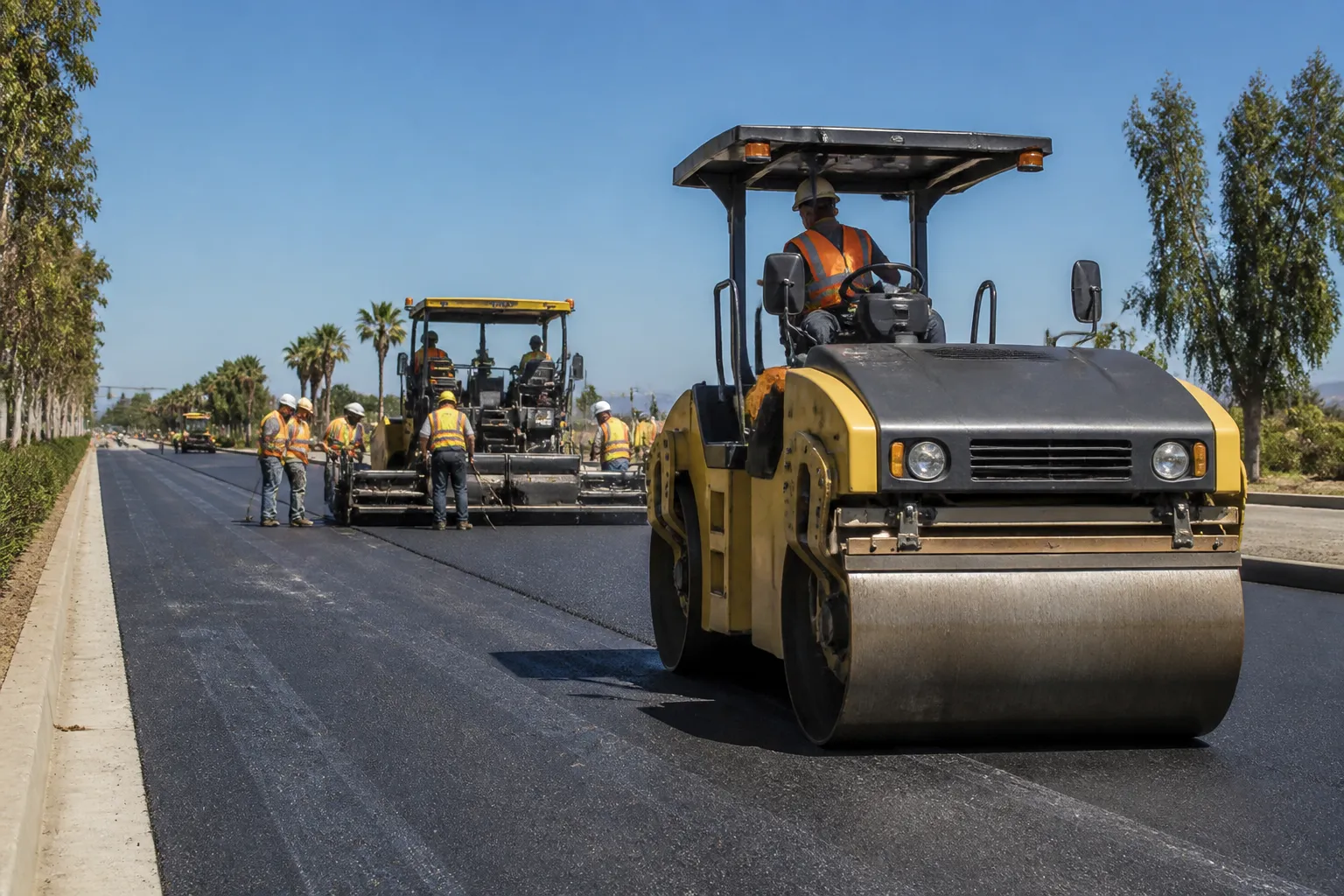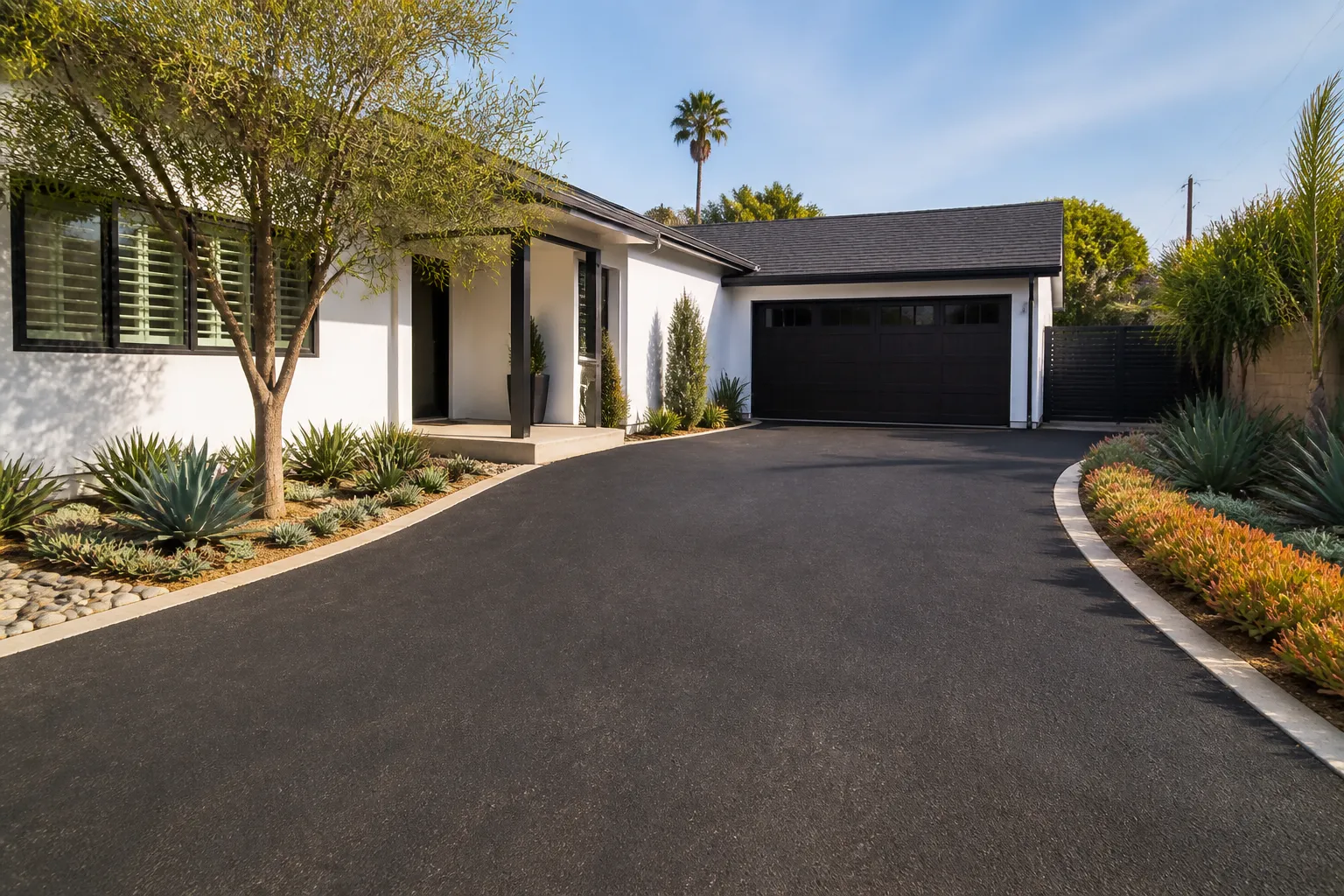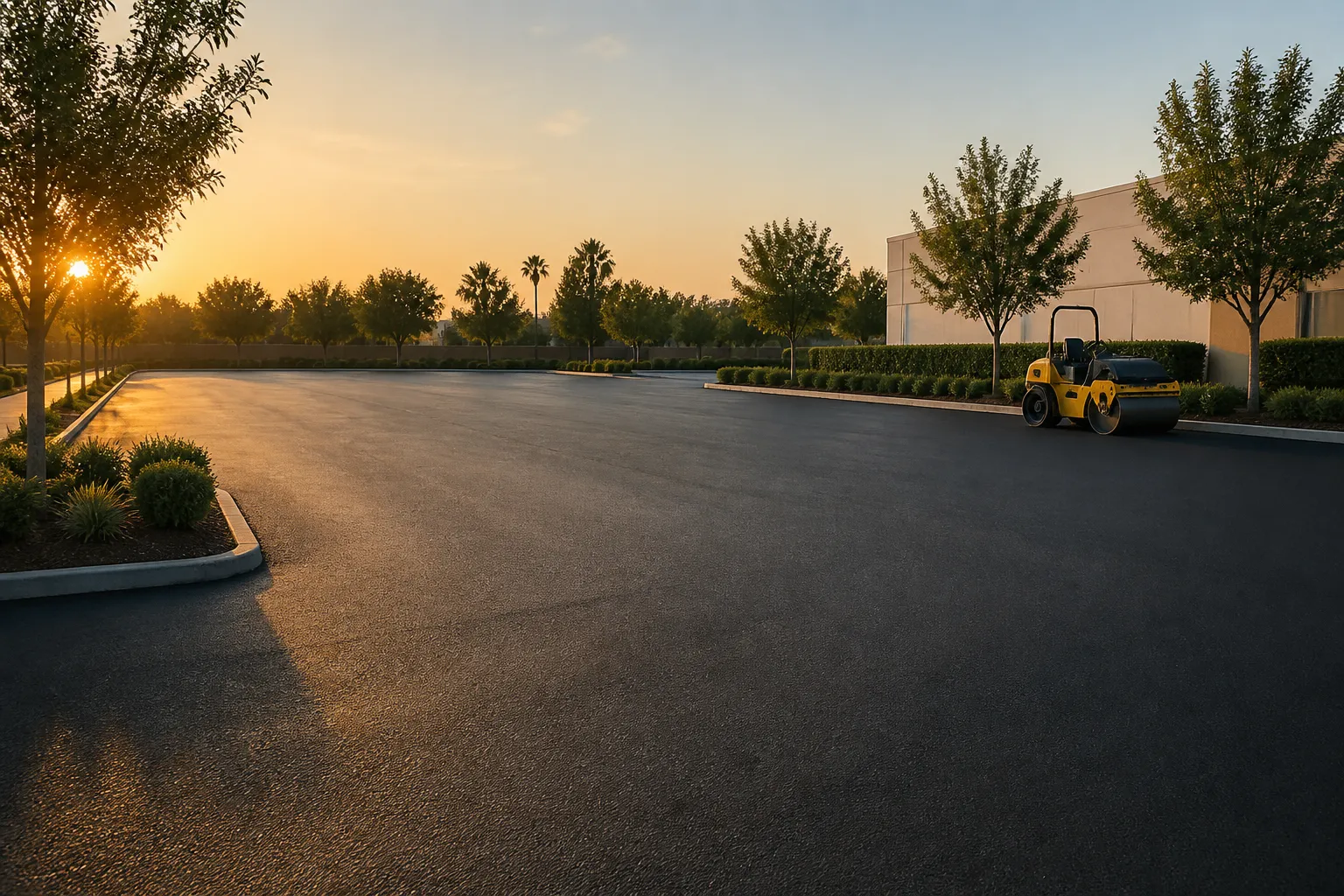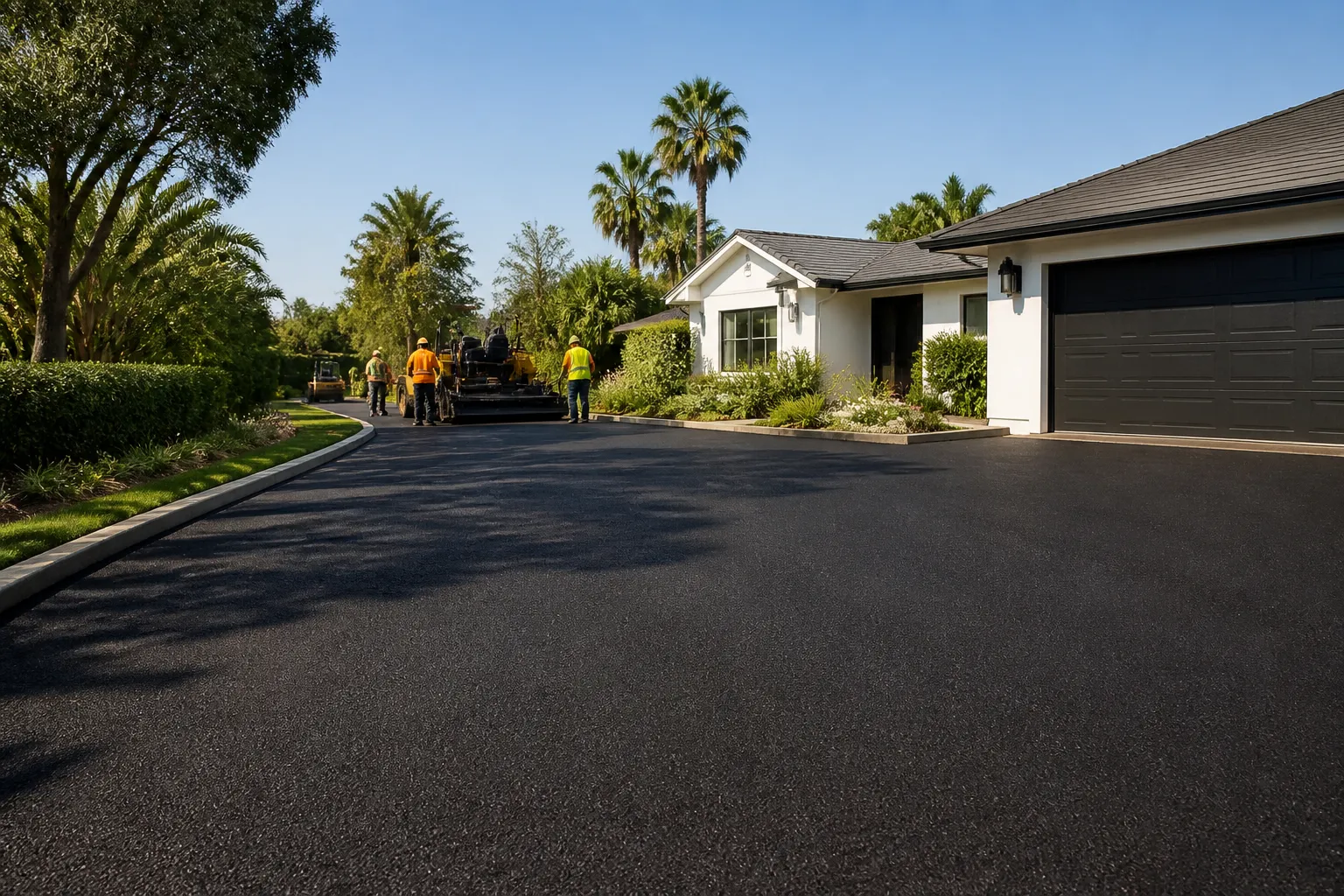
Commercial parking-lot paving costs in Costa Mesa can vary widely because a parking lot is more than a large paved rectangle. It must support the vehicles that use it, move water away from buildings and travel lanes, provide safe access, and accommodate details such as curbs, drainage structures, loading areas, and striping. A useful budget starts with a site-specific scope rather than a simple cost-per-space estimate.
Property owners and managers get the clearest picture when proposals explain what the existing pavement needs and how the work will be phased. That helps compare options accurately and avoid surprises after the project begins.
What determines commercial parking-lot paving cost?
Size is an important factor because it affects materials, equipment time, and labor. However, square footage alone does not define the project. A large open lot with easy truck access is often more efficient to pave than a smaller lot with tight circulation, active businesses, multiple entrances, and many areas that must be protected or worked around.
The condition of the existing lot also matters. A surface that is structurally sound but weathered may be a candidate for repairs and resurfacing. A lot with deep settlement, extensive alligator cracking, repeated potholes, or poor drainage may require removal and base repair in affected sections or throughout the site. The correct scope depends on what is happening below the visible surface.
Base work and drainage are major considerations
Asphalt depends on a stable, properly compacted foundation. When water enters the pavement through cracks, low spots, or failed drainage, it can weaken the base and lead to more extensive failures. Repairing the surface alone without addressing water movement may not solve the underlying problem.
An estimate may include excavation, aggregate base, grading, compaction, drainage adjustments, or work around catch basins. These are not incidental details. They help create a parking surface that supports traffic and directs water away from buildings, entrances, and low areas. Existing curbs, utility structures, landscaping islands, and concrete walkways can also affect the preparation and finishing work.
Traffic use influences asphalt design
A parking lot used mainly by passenger vehicles has different needs than a lot that regularly receives delivery trucks, service vehicles, trash collection, or equipment. Loading zones, dumpster pads, drive lanes, and entrances often see more stress from turning and stopping traffic than ordinary parking stalls.
During a pavement evaluation, it is helpful to identify how the property is used throughout the day. The paving plan can then account for areas that need a more robust solution. A defined scope should explain how damaged sections are handled and what pavement thickness is planned for the intended use.
Typical elements in a parking-lot proposal
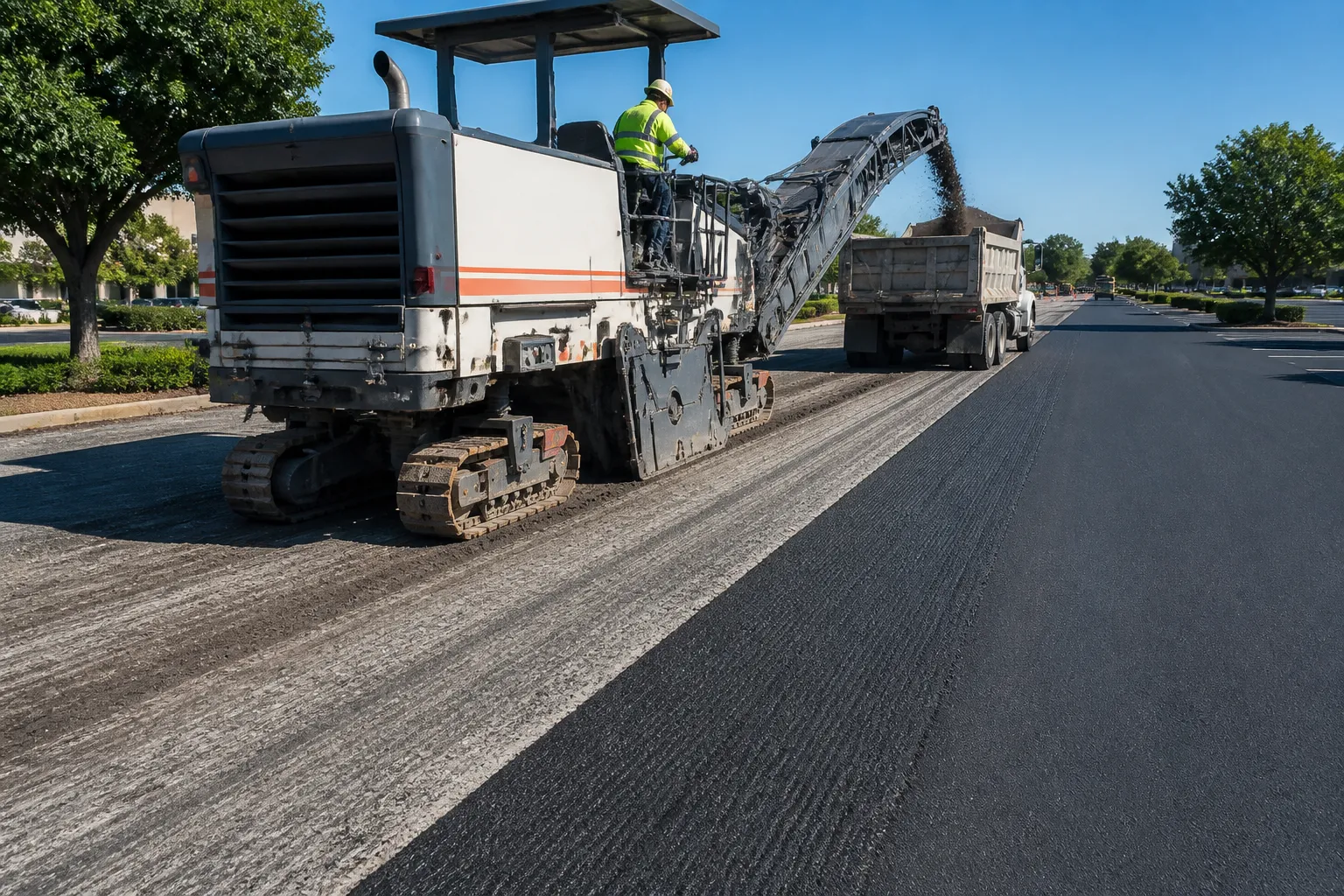
- Existing pavement removal, milling, or localized full-depth repairs
- Excavation, base installation, grading, and compaction
- New asphalt placement or resurfacing over prepared pavement
- Drainage and catch-basin adjustments
- Curb, edge, entrance, and sidewalk transitions
- Parking layout, line striping, directional markings, and wheel stops
- Phasing, access control, and cleanup for an active property
Not every project includes every item. The proposal should identify which ones apply to your property and distinguish essential repairs from optional improvements.
Repairs, resurfacing, or replacement?
Commercial owners sometimes have several workable options. Isolated damage may be addressed with targeted repairs. A structurally stable lot with surface wear can sometimes be resurfaced after proper preparation. Replacement is often more appropriate when widespread base failure or severe drainage-related deterioration is present.
Comparing these options is not simply a matter of finding the lowest immediate number. Consider the expected use of the lot, the condition of the base, the timing of future repairs, and the disruption that work may cause tenants or customers. A phased plan may make sense for some larger properties, while other lots benefit from addressing widespread failure in one coordinated project.
How to prepare for an accurate estimate
Share any known information about recurring puddles, patched areas, vehicle traffic, drainage concerns, and access restrictions. Let the contractor know about delivery schedules, tenant hours, special events, and any areas that must remain open. Clear communication allows the project scope to address operational needs as well as pavement conditions.
Ask for a written description of the preparation work, repair areas, asphalt work, drainage details, striping, and anticipated access plan. That makes it easier to compare proposals on the same basis.
Request a property-specific evaluation
Costa Mesa Asphalt Paving can assess your commercial lot, explain the conditions affecting cost, and recommend a practical paving, repair, resurfacing, or maintenance plan. A site evaluation provides the details needed to budget for a surface that works for your property, traffic, and schedule.